
Late summer is the last comfortable window to close out deferred work before autumn weather starts dictating your schedule. Booking ship repair services in August and early September, rather than after the first heavy-weather passage, keeps repairs planned instead of reactive.
Working with a ship repairing company like Coast to Coast International Marine Services that already knows your ports, classification requirements, and your usual berth windows shortens the whole process considerably.
The Atlantic hurricane season runs from June 1 through November 30, and the National Hurricane Center’s climatology data puts the statistical peak around September 10. That means the repairs you defer in July are the ones tested in October.
By partnering with Coast to Coast International Marine Services, vessel operators at our ship repairing company in Wilmington, DE, can make sure critical steelwork, hatch seal replacements, and lashing gear recertifications are completed seamlessly during routine port calls.
Why Late Summer Is the Deadline, Not the Starting Line
Yard availability along the Eastern Seaboard tightens sharply once the first named storm forces vessels off schedule. Steel, gaskets, and long-lead spares that ship in 3 to 10 days during a quiet August can stretch to 3 weeks in October.
We see the same pattern most years: quotes requested in September, work performed in November, damage sustained in between.The other factor is berth time. A hatch cover repair that takes 6 to 12 hours alongside during a normal cargo call becomes an off-hire event when it has to happen after a green-water incident.
Hull and Structural Steel: Find the Thin Spots First
Heavy seas load a hull in ways calm-water transits never do, and corroded or wasted steel is where that loading concentrates. Ultrasonic thickness gauging on suspect areas gives you numbers to work with rather than a visual guess. Most class societies flag renewal when diminution reaches roughly 20 to 25 percent of original scantling, though substantial corrosion is typically noted well before that.
Areas worth close attention before autumn include:
- Forecastle and bow plating, where slamming loads and spray corrosion combine
- Deck stringers and hatch coaming brackets, common cracking points under torsional loading
- Ballast tank internals, particularly coating breakdown at weld seams and stiffener toes
- Freeing ports and scupper penetrations, which fail quietly and flood decks fast
- Bulwark stays and pipe supports, often overlooked until they tear loose
Crop-and-renew work on a modest doubler patch usually runs a few hours per plate with ABS-certified welders on the job. Waiting until a crack propagates past a stiffener turns that into a class-attended repair with a survey attached.
Hatch Covers and Weathertight Integrity
Hatch cover failures remain one of the most common contributors to cargo damage claims in heavy weather. Ultrasonic tightness testing gives a repeatable reading across the full perimeter, and it catches leak paths that a chalk test or hose test will miss. IACS Recommendation 14 sets the general framework most surveyors reference.
The wear items are predictable and inexpensive compared to a wet cargo claim:
- Rubber packing, which should compress roughly 3 to 8 mm depending on the design and must not be permanently set
- Compression bars, where corrosion or bending destroys the sealing line even with new rubber fitted
- Cross joint wedges and cleats, frequently seized or missing on older bulk carriers
- Drainage channels and non-return valves, which back-feed water into the hold when blocked
Replacing a full run of packing on a single hatch typically takes one shift with the right gasket profile on hand. Sourcing that profile in October, mid-storm, is the part that goes wrong.
Mooring Lines, Lashing Gear and Anchor Equipment
Storm-force winds at berth put loads on mooring arrangements that routine port calls never approach. OCIMF’s Mooring Equipment Guidelines (MEG4) recommend retiring lines when residual strength falls below 75 percent of the original ship design minimum breaking load. Visual inspection alone rarely catches that, which is why line rental for the heavy-weather months is a practical option for many operators.
Anchor chain deserves the same scrutiny. Most administrations allow a mean diameter wear of about 12 percent before renewal, and windlass brake holding capacity should be tested rather than assumed. A dragging anchor in a squall is a very expensive way to learn that the brake linings were glazed.
For lashing gear, count the inventory honestly. Missing twistlocks and bent turnbuckles get borrowed and never returned, and a shortfall only becomes visible when the deck stow needs full securing.
Bilge, Drainage and Pumping Systems
Water that gets aboard has to leave quickly, and drainage systems are among the first things neglected during a busy summer. Test each bilge alarm float physically rather than at the panel, and confirm strainer baskets are clear. Emergency bilge suction valves should be operated through their full travel, not just cracked open.
We also recommend checking that deck scuppers and freeing port flaps swing freely. Seized flaps trap green water on deck, which shifts the stability picture at exactly the wrong moment.
Steering, Propulsion and Electrical Redundancy
Heavy weather is when redundancy earns its keep. A steering gear changeover test that takes 10 minutes alongside is far cheaper than discovering a stuck solenoid off Hatteras in a Force 9.
Before autumn, confirm the following are exercised and logged:
- Both steering gear power units, including local emergency control from the tiller flat
- Emergency generator, run under load for the full period the regulations call for
- Watertight door indicators and seals, tested closed and confirmed at the bridge panel
- Navigation lights and standby circuits, with spare bulbs actually aboard
- Weathertight closures on vents and air pipes, checked for gasket condition and free-swinging floats
Coordinating the Work Across Multiple Ports
Most operators do not have the luxury of one long yard period, so the work gets split across three or four calls. That is where a single point of contact matters more than the hourly rate. Our teams handle repairs alongside supply and husbandry so that gaskets, steel, welding gas and a certified crew all land at the same berth on the same day.
Class involvement is worth planning early too. If a repair needs attendance, coordinating with the surveyor two weeks out is straightforward, while doing it on 24 hours’ notice rarely is.
A Practical Late-Summer Sequence
If you are working backward from the first week of October, a workable order looks like this:
- Weeks 1 to 2: survey and gauge, build the defect list with photographs and thickness readings
- Weeks 3 to 4: order long-lead items (gasket profile, steel plate, valve spares, lashing inventory)
- Weeks 5 to 6: perform steel and hatch work during scheduled cargo calls
- Week 7: function-test everything and close out the class or flag items
How long does hatch cover packing replacement take?
A single hatch typically takes 6 to 12 hours with the correct gasket profile on hand and the vessel alongside. Compression bar renewal adds time, since it involves cutting, fitting and welding around the full coaming perimeter.
Can repairs be done alongside instead of in a shipyard?
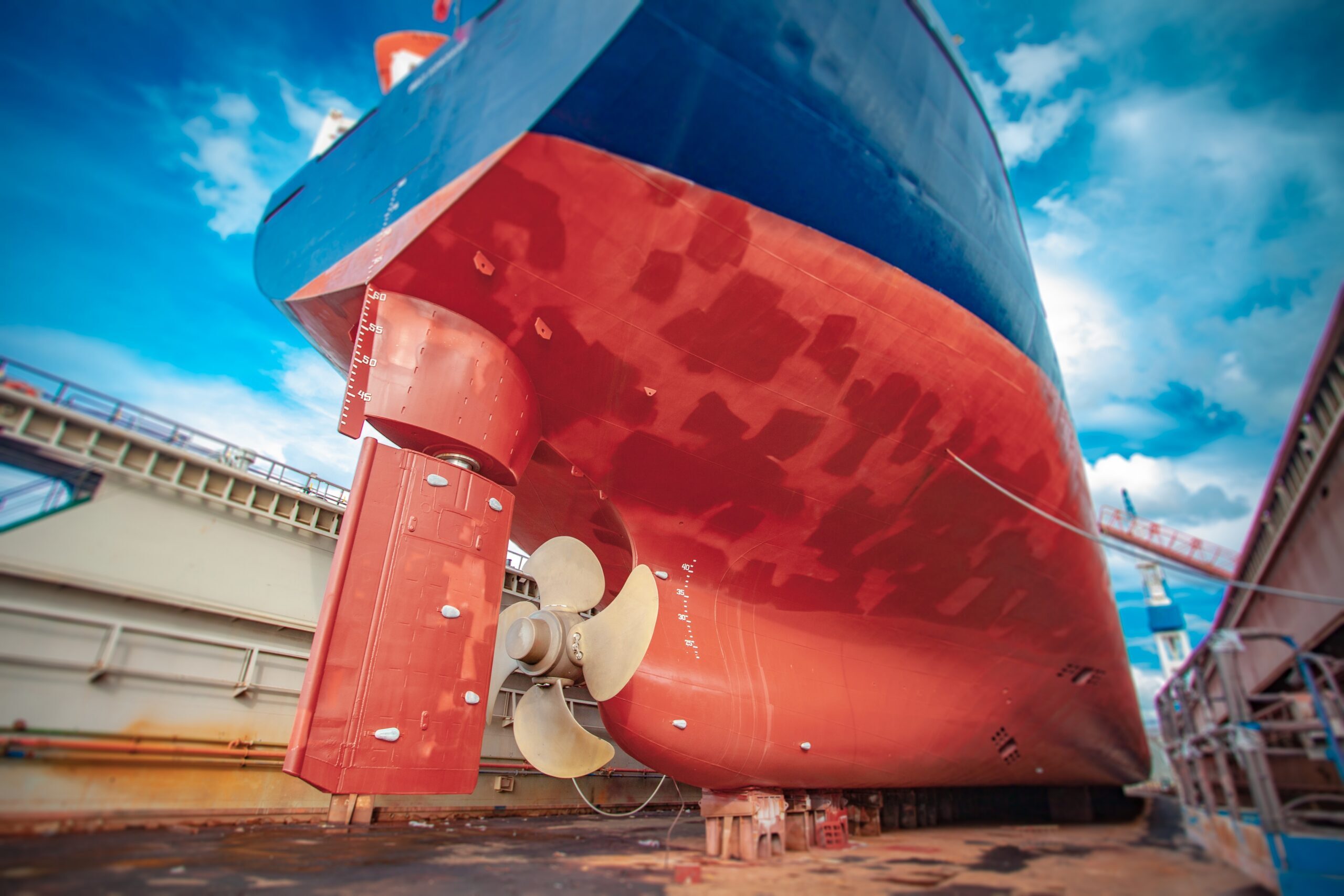
Yes, a large share of pre-storm work (hatch sealing, deck steel, piping, lashing gear, mooring equipment) is performed alongside during normal cargo operations. Anything below the waterline or affecting main propulsion generally still requires drydock or a controlled lay berth.
Get Your Pre-Storm Repair List Scheduled
Coast to Coast International Marine Services coordinates repairs, supply and husbandry across major Eastern Seaboard ports, with ABS-certified welders and 24/7 availability. Send us your defect list and next port rotation, and we will build a schedule that fits your calls rather than interrupting them. Contact us today!