
Managing organic waste on an ocean-going commercial vessel is one of the most strictly audited daily operational functions aboard. Food waste generated in the galley and mess rooms must be handled, comminuted, stored, or discharged under rigid international environmental standards. Improper handling or unauthorized discharge risks severe Port State Control (PSC) fines, vessel detentions, and lasting reputational damage.
Coast To Coast International Marine Services provides shipowners, chief engineers, and chief stewards with specialized galley equipment, trustworthy technical stores, and clear crew procedures for food waste disposal on ships in NY and throughout the region.
1. MARPOL Annex V Framework for Organic Food Waste
The International Maritime Organization (IMO) regulates all garbage management on commercial ships through MARPOL Annex V. Under these regulations, discharge of food waste into the sea is strictly prohibited except under specific geographic, operational, and physical conditions.
Key regulatory thresholds for food waste management include:
- Outside Special Areas (En Route): Ground food waste capable of passing through a screen with mesh openings no greater than 25 mm (1 inch) may be discharged while the vessel is en route and at least 3 nautical miles from the nearest land. Uncomminuted (unground) food waste can only be discharged at least 12 nautical miles from land while en route.
- Inside IMO Special Areas: In designated environmentally sensitive zones (such as the Wider Caribbean Region, Mediterranean Sea, Baltic Sea, and North Sea), discharge of unground food waste is completely banned. Comminuted food waste (passable through a 25 mm screen) may only be discharged while en route and at least 12 nautical miles from the nearest land or ice shelf.
- Port and Anchorage Restrictions: All discharge of food waste is strictly prohibited while berthed alongside, anchored in port harbors, or navigating inland waterways.
2. Onboard Galley Waste Management Equipment and Maintenance
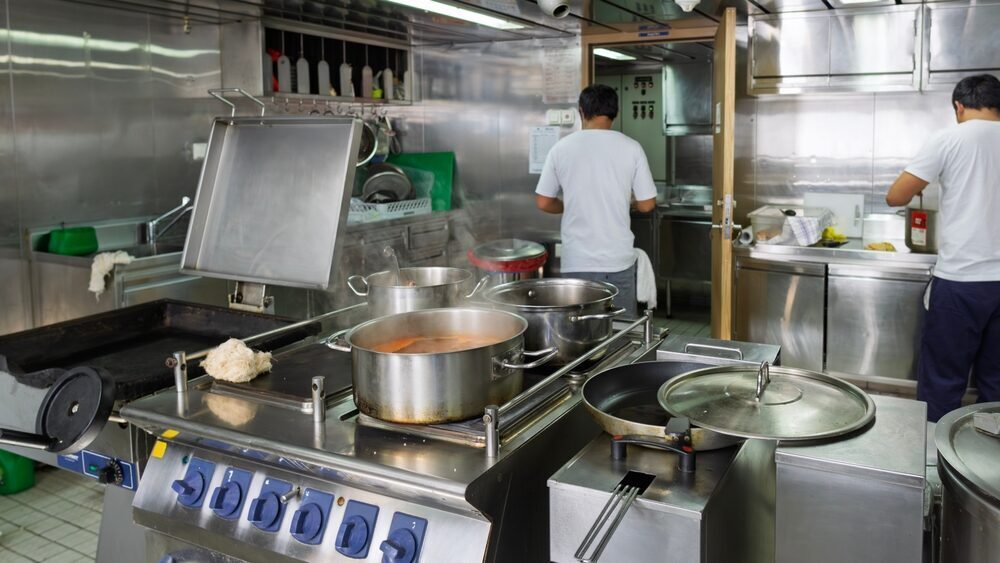
Complying with the 25 mm comminution standard requires heavy-duty, marine-grade food waste disposers and pulper systems installed directly in galley prep areas and dishwashing stations.
Heavy-Duty Galley Macerators and Pulpers
Commercial marine disposers operate under harsh conditions, processing bones, shells, fibrous vegetable matter, and bulk food leftovers.
Coast To Coast International Marine Services supplies and services heavy-duty galley waste systems built to withstand marine environments:
- High-Torque Stainless Steel Macerators: Continuous-feed waste grinders engineered with corrosion-resistant 316 stainless steel housings and heavy-duty cutting elements.
- Dewatering and Compaction Systems: Advanced pulpers that separate solid organic pulp from liquid effluent, reducing food waste volume by up to 80% for clean, odor-controlled storage while in port.
- IMPA/ISSA Spare Parts Sourcing: Supplying replacement cutter disks, mechanical seals, solenoids, control panels, and motor assemblies directly to vessels during port calls.
3. Storage, Hygiene, and Port Reception Facilities
When operating in ports, coastal zones, or Special Areas where sea discharge is prohibited, vessels must store organic waste on board or arrange for shore-based port reception services.
Odor Control and Vector Prevention
Stored organic waste degrades rapidly, generating unpleasant odors and pest risks if not managed properly:
- Refrigerated Waste Lockers: Storing bagged food waste inside dedicated cold storage units maintained between 2°C and 4°C to prevent decomposition and bacterial growth.
- Hygienic Bio-Bins & Liners: Utilizing heavy-duty, color-coded waste receptacles and bio-degradable liners matching the vessel’s Garbage Management Plan (GMP).
- Enzyme Cleaners & Sanitizers: Sourcing specialized marine-grade bio-enzymatic cleaners that break down organic residue in galley drain lines without corroding pipework.
Shore Reception Coordination
When onboard storage reaches capacity during extended port stays, Coast To Coast International Marine Services coordinates certified shore-side garbage collection and port reception facilities, ensuring full documentation and official waste transfer receipts for the Garbage Record Book.
4. Documentation: The Garbage Record Book and Audit Readiness
Every discharge, whether to a shore facility, incinerator, or permitted sea zone, must be logged immediately in the vessel’s official Garbage Record Book (Part I).
Port State Control inspectors routinely audit these logs against:
- Geographic Coordinates & Vessel Speed: Verifying that sea discharges occurred at correct distances from land while the ship was actively making way.
- Estimated Volume Discharged: Cross-referencing logged volumes against galley meal preparation counts and port stay durations.
- Receipts for Shore Discharge: Matching entries against formal receipts issued by licensed port reception contractors.
Use up and down arrow keys to resize the meta box pane.
Complete Maritime Environmental Support
Maintaining smooth galley operations while staying 100% compliant with MARPOL Annex V requires robust hardware, proper consumables, and dependable onshore port coordination.
Coast To Coast International Marine Services provides the marine stores, macerator spare parts, sanitation chemicals, and port logistics necessary to keep your vessel compliant and operational. Contact us today!